

Publications & Research
Access baseline surveys, technical reports, and evidence-based insights from the LeatherTrace Bangladesh project.
REPORTS
REPORT

Traceability in Bangladesh’s Leather Value Chain: A Baseline Survey
Traceability in Bangladesh’s Leather Value Chain: A Baseline Survey
Traceability in the leather value chain is crucial for ensuring transparency, accountability, and sustainability from farm to finished product. Growing global compliance and sustainability requirements are increasing the need for reliable traceability systems across the leather sector. This Baseline Survey examines the major challenges and barriers faced by the 16 Leathertrace Bangladesh project partner organizations in adopting traceability technologies within the Bangladeshi context.

The Leathertrace Bangladesh Policy Blueprint: A Strategic Roadmap for Enhancing the Adoption of Digital Traceability in Bangladesh’s Leather Sector
Traceability in Bangladesh’s Leather Value Chain: A Baseline Survey
Digital traceability is increasingly important for ensuring transparency, sustainability, and compliance across global leather supply chains. This Policy Blueprint presents a strategic roadmap for strengthening the adoption of digital traceability systems in Bangladesh’s leather sector, outlining key policy actions to improve governance, regulatory coordination, digital infrastructure, and sector-wide traceability practices.

Assessing the Environmental Data Systems
and Institutional Capacity of Bangladeshi's
Leather Industry
Traceability in Bangladesh’s Leather Value Chain: A Baseline Survey
Bangladesh’s leather sector is a key export industry with strong potential for economic growth but faces major environmental and sustainability challenges. Strengthening Life Cycle Assessment (LCA), traceability, and environmental compliance is essential to improve international market access, enhance competitiveness, and support sustainable development.
CASE STUDY
REPORT
Traceability in Bangladesh’s Leather Value Chain: A Baseline Survey
Traceability within the leather value chain is essential for ensuring transparency, accountability, and socio-environmental sustainability from farm to finished product. Growing global regulations and sustainability expectations require robust traceability systems to verify responsible sourcing, production practices, and compliance standards. This Baseline Survey examines the challenges and barriers faced by the 16 Leathertrace Bangladesh project partner organizations in adopting traceability technologies within the Bangladeshi context.
Traceability in Bangladesh’s Leather Value Chain: A Baseline Survey
Traceability in Bangladesh’s Leather Value Chain: A Baseline Survey
Digital traceability is increasingly important for ensuring transparency, sustainability, and compliance across global leather supply chains. This Policy Blueprint presents a strategic roadmap for strengthening the adoption of digital traceability systems in Bangladesh’s leather sector, outlining key policy actions to improve governance, regulatory coordination, digital infrastructure, and sector-wide traceability practices.
The Leathertrace Bangladesh Policy Blueprint: A Strategic Roadmap for Enhancing the Adoption of Digital Traceability in Bangladesh’s Leather Sector
Traceability in Bangladesh’s Leather Value Chain: A Baseline Survey
Bangladesh’s leather sector is a key export industry with strong potential for economic growth but faces major environmental and sustainability challenges. Strengthening Life Cycle Assessment (LCA), traceability, and environmental compliance is essential to improve international market access, enhance competitiveness, and support sustainable development.
Assessing the Environmental Data Systems
and Institutional Capacity of Bangladeshi's
Leather Industry

Digital Transformation of Bangladesh’s Leather Supply Chain:
A Case Study of the LeatherTrace Traceability System
This pilot tracked cow suede leather from Sirajganj hide collection centres through Superex Leather Ltd to Leatherex Footwear Industries Ltd, where it was manufactured into 1,000 pairs of fully traceable Leather Ballerina shoes and exported to Berlin, Germany, demonstrating the successful implementation of end-to-end digital traceability in the leather and footwear supply chain.
Digital Transformation of Bangladesh’s Leather Supply Chain:A Case Study of the LeatherTrace Traceability System
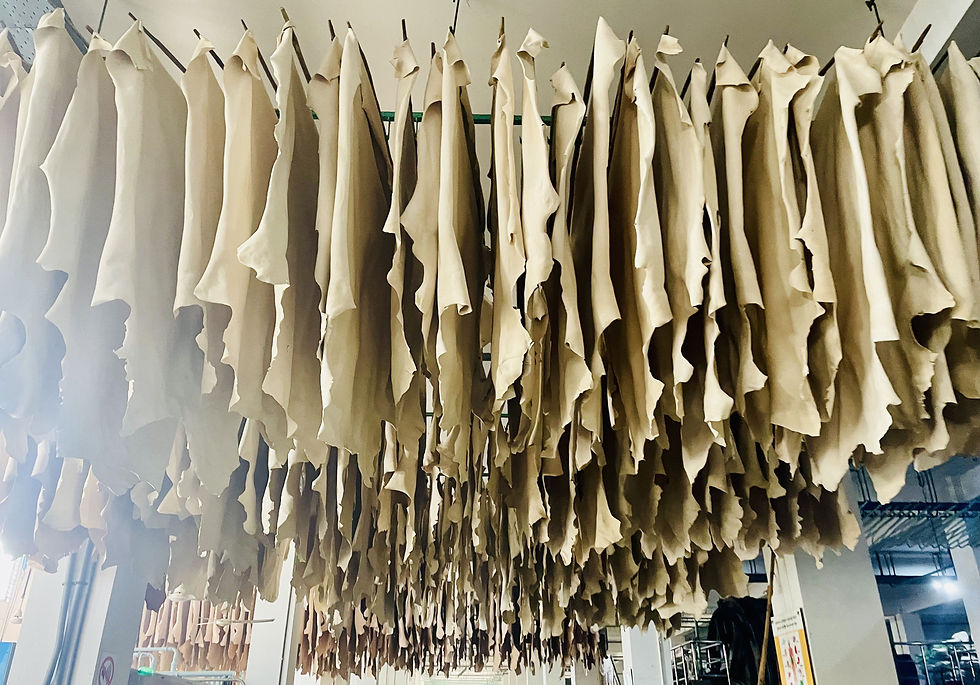
End-to-End Traceability in Bangladesh’s Leather Supply Chain:
A Case Study
Digital Transformation of Bangladesh’s Leather Supply Chain:A Case Study of the LeatherTrace Traceability System
This pilot demonstrated multi-tier traceability by linking wet blue leather sourced through Sadar Tannery Ltd to footwear production at Arcobaleno Footwear Ltd, culminating in 1,000 pairs of men’s leather shoes with complete digital chain-of-custody documentation and export to Poland, showcasing transparency, accountability, and end-to-end visibility across the leather value chain.

Digital Transformation of Bangladesh’s Leather Supply Chain:A Case Study of the LeatherTrace Traceability System
Advancing Supply Chain Transparency in the Leather Industry Through End-to-End E-Traceability: A Pilot Case Study
The pilot digitally traced 975 pieces of raw hides, resulting in the production of 19,500 sq. ft. of crust leather, of which 13,423 sq. ft. was processed into finished leather. 1,940 sq. ft. of Monza Black leather was then used to manufacture 390 ladies' body bags, which were successfully exported to Germany on 5 June 2026. The pilot demonstrated the feasibility of a fully digital, QR-code-enabled, end-to-end traceable leather supply chain in Bangladesh.
CASE STUDY
End-to-End Traceability in Bangladesh’s Leather Supply Chain: A Case Study
Traceability within the leather value chain is essential for ensuring transparency, accountability, and socio-environmental sustainability from farm to finished product. Growing global regulations and sustainability expectations require robust traceability systems to verify responsible sourcing, production practices, and compliance standards. This Baseline Survey examines the challenges and barriers faced by the 16 Leathertrace Bangladesh project partner organizations in adopting traceability technologies within the Bangladeshi context.
Digital Transformation of Bangladesh’s Leather Supply Chain:A Case Study of the LeatherTrace Traceability System
End-to-End Traceability in Bangladesh’s Leather Supply Chain: A Case Study
The pilot digitally traced 975 pieces of raw hides, resulting in the production of 19,500 sq. ft. of crust leather, of which 13,423 sq. ft. was processed into finished leather. 1,940 sq. ft. of Monza Black leather was then used to manufacture 390 ladies' body bags, which were successfully exported to Germany on 5 June 2026. The pilot demonstrated the feasibility of a fully digital, QR-code-enabled, end-to-end traceable leather supply chain in Bangladesh.
Advancing Supply Chain Transparency in the Leather Industry Through End-to-End E-Traceability: A Pilot Case Study

